From 1 June 2026, children or teenagers under the age of 16 are NOT allowed to have their own social media accounts in Malaysia for platforms that have more than eight million users in Malaysia.
This regulation was implemented in line with the introduction of two new codes by the Malaysian Communications and Multimedia Commission (MCMC).
These codes are the Child Protection Code (CPC) and the Risk Reduction Code (RMC) based on the Online Safety Act (ONSA).
In this regard, social media platform users also need to upload official government-issued documents to verify their age.
Find out more about this news below.
Many teenagers and children under 16 are already active on social media. Even if it doesn’t match their age.
Studies show that using social media too early can affect children’s mental, emotional and social development.
They are also vulnerable to inappropriate content, cyberbullying and the risk of online harassment.
In parallel, children aged 16 and under are not allowed to open or have social media accounts for the platform which has more than eight million users in Malaysia.
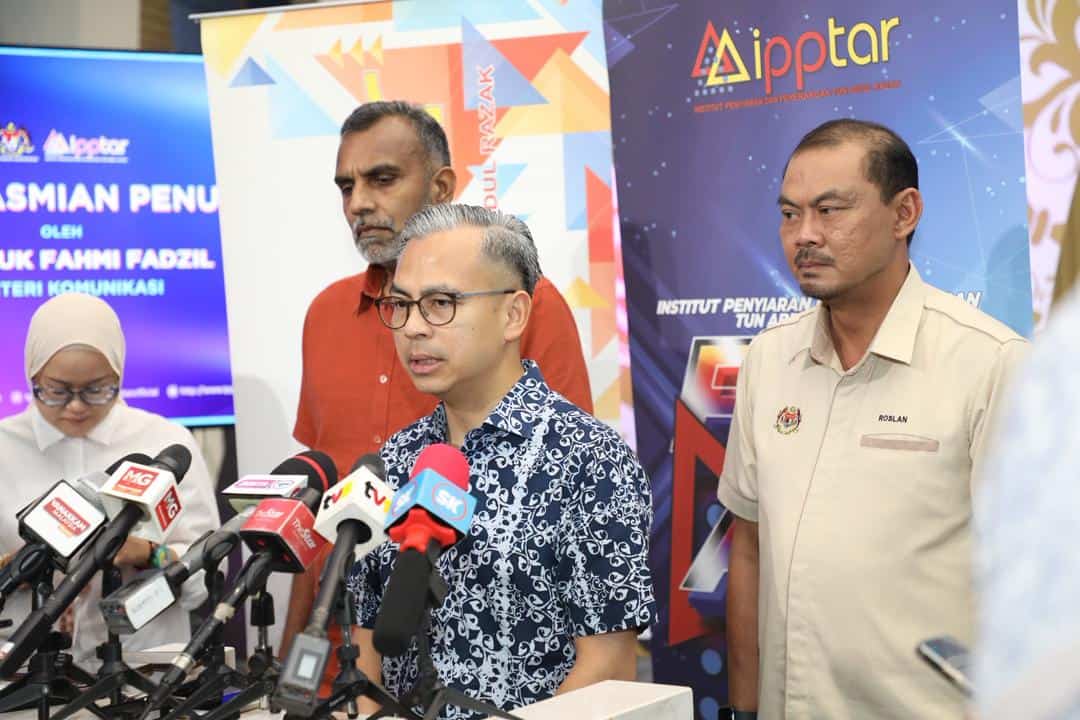
According to the Minister of Transportation, Datuk Fahmi Fadzil, this step is part of the government’s efforts to reduce the increase in cybercrime involving the younger generation, in addition to protecting children from the risk of online exploitation.
This prohibition is also in line with the implementation of two new codes by the Malaysian Communications and Multimedia Commission (MCMC).
View the MCMC media release below:


All social media platform users in Malaysia must go through an age verification process using official government documents such as KTP, Passport or other official documents.
This rule aims to prevent teenagers under the age of 16 from opening or having their own accounts independently.
The self-declaration method will not be used to verify age as anyone can click and declare that they are over 18 years old.
This was stated by Deputy Minister of Communications Teo Nie Ching after inaugurating the Safe Internet Campaign Community Carnival in Kuching recently.

However, so far the specific technology that social media platforms need to use for age verification purposes has not been detailed.
The government will provide an appropriate time period to carry out this process before law enforcement action is carried out.

Yes, existing social media accounts are also required to go through an age verification process (age verification) slowly after June 1, 2026.
The Malaysian government through the Malaysian Communications and Multimedia Commission (MCMC) confirmed that no exceptions will be provided to older users to ensure that the objectives of the Online Security Act 2025 (ONSA) are fully achieved in screening users under the age of 16.
This verification process will not be carried out suddenly or involve direct limitations on the implementation date.
On the other hand, the government gives platform providers time to carry out the verification process periodically.
Before requiring all Malaysians to upload MyKad, the government used a sandbox to test the effectiveness of the digital identity verification system.
Authorities want to ensure that the method is not easily hacked, detects age accurately, and does not have “backdoors” that could allow children to pass through.
Through this field test, MCMC assesses the extent to which social media companies protect sensitive user data (such as ID card numbers and faces) to ensure that they comply with the Personal Data Protection Act (PDPA) before it is fully enforced.
In line with international trends
The government is also reviewing the implementation of a universal age limit as implemented in Australia and several other countriesincluding from an enforcement and monitoring perspective.
“Australia will start implementing it this December. Each country has its own approach, and we are evaluating the most appropriate method for Malaysia,” he said.

Photo & news sources: RTM News, RTM News Facebook
That’s right, children and teenagers under the age of 16 are not allowed to have their own social media accounts in Malaysia from 1 June 2026.
For protect children from online risks such as:
cybercrime
financial fraud
cyber bullying
sexual predator
Content is not age appropriate
Social media platforms will be required to implement it eKYC (Electronic Know Your Customer) — verify identity using MyKad, passport or MyDigital ID.
From. Australia will begin implementing age restrictions this December, and several other countries have implemented strict age restrictions for social media accounts.
Parents may need to be more sensitive to:
-children’s use of devices
-internet access at home
-control content regulation
The government is also expected to provide digital security awareness campaign to facilitate understanding.
The final mechanism is still being refined, but the government’s focus is to ensure it Children cannot register their own accounts so that content on social media can only be accessed by parents.
PakarPBN
A Private Blog Network (PBN) is a collection of websites that are controlled by a single individual or organization and used primarily to build backlinks to a “money site” in order to influence its ranking in search engines such as Google. The core idea behind a PBN is based on the importance of backlinks in Google’s ranking algorithm. Since Google views backlinks as signals of authority and trust, some website owners attempt to artificially create these signals through a controlled network of sites.
In a typical PBN setup, the owner acquires expired or aged domains that already have existing authority, backlinks, and history. These domains are rebuilt with new content and hosted separately, often using different IP addresses, hosting providers, themes, and ownership details to make them appear unrelated. Within the content published on these sites, links are strategically placed that point to the main website the owner wants to rank higher. By doing this, the owner attempts to pass link equity (also known as “link juice”) from the PBN sites to the target website.
The purpose of a PBN is to give the impression that the target website is naturally earning links from multiple independent sources. If done effectively, this can temporarily improve keyword rankings, increase organic visibility, and drive more traffic from search results.