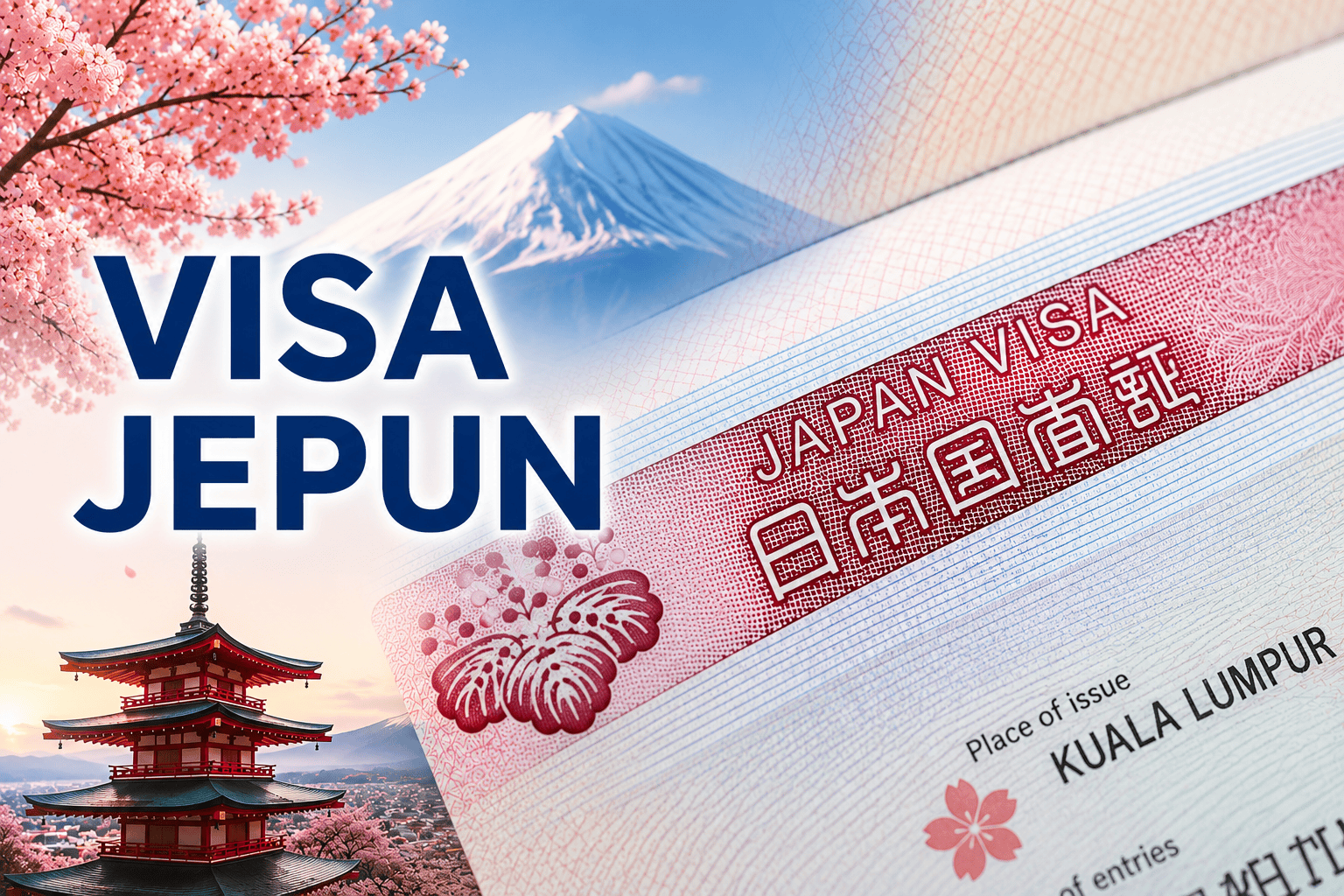
Japanese visa is now attracting a lot of attention after the Japanese Government announced an increase in entry visa fees for foreigners starting July 2026. This increase is the first in almost 50 years and involves single-entry visas as well as multiple-entry visas.
For Malaysians and other travelers who need a visa to enter Japan, these changes are important to know before planning a trip.
Also read: Lost Malaysian Passport, What Should Be Done? – 2026 Fine Rates
Japan Raises Visa Fees For First Time Since 1978
According to The Japan Times, the Japanese government decided to increase the fees for single entry visas 3,000 yen (approx. RM77) to 15,000 yen (approx. RM383 to RM385).
At the same time, payment for multiple entry visa (multiple entry visa) also increased from 6,000 yen (approx. RM153) to 30,000 yen (approx. RM767 to RM769).
According to a Kyodo News report, this increase is the first since 1978 and was carried out to adjust visa rates to current economic changes.
Why Are Japanese Visa Fees Increasing?
The Japanese Ministry of Foreign Affairs informed that visa fee rates have not been revised for almost five decades.
Among the main factors for this increase are:
- Increase in inflation rate since 1978
- Depreciation of the yen currency
- Coordination of visa administration costs
- Bringing Japan’s visa rate closer to G7 countries
The Japanese government is of the view that the old rates no longer reflect the costs of managing the country’s current visa system.

Will This Increase Affect Japanese Tourism?
Minister of Foreign Affairs of Japan, Toshimitsu Motegisaid the government does not expect the increase to have a major impact on the country’s tourism industry.
He says:
“We do not expect this move to have an immediate impact on inbound tourism.”
Japan continues to be one of the world’s most popular tourist destinations with millions of international visitors each year.
What About Japan’s eVISA System?
Along with digitalization efforts, Japan is now offering eVISA system for certain tourists who require short-term visas.
Through this system, applicants can apply online depending on:
- Citizenship
- Country of residence
- Travel destination
So far, Japanese authorities have not confirmed whether the new rates also apply to eVISA applications.
However, observers expect this increase to include eVISA as it is only a digital application method and not a different category of visa.
Japan Ready to Introduce JESTA System
Apart from eVISA, Japan is also developing JESTA (Japan Electronic System for Travel Authorization).
The system is expected to be implemented in fiscal year 2028 and works very similarly to ESTA in the United States.
Through JESTA, visitors from countries that do not require a visa need to submit travel information in advance before leaving for Japan.
This step aims to:
- Reduces the risk of admitting unqualified individuals
- Speed up the immigration process
- Strengthen security checks
Who Will Be Affected by the Japanese Visa Increase?
This fee increase only applies to visitors who need to obtain a visa before entering Japan.
He does not change entry requirementsvisa duration or visa category offered.
However, those who require a visa should consider these additional costs when planning their travel budget.
What to Do Before Applying for a Japanese Visa?
If you are planning to travel to Japan in the near future, make sure you:
- Check if you need a visa.
- Find out the latest visa fee rates.
- Make sure travel documents are complete.
- Review the latest entry requirements set by the Japanese government.
- Apply for a visa early to avoid delays.
New Rates for Japanese Visa 2026
| Types of Visas | Old Rates | New Rates |
|---|---|---|
| Single Entry Visa | 3,000 yen (±RM77) | 15,000 yen (±RM383-RM385) |
| Multiple Entry Visa | 6,000 yen (±RM153) | 30,000 yen (±RM767-RM769) |
Japan Visa FAQs (FAQ).
The cost of a single-entry visa has increased from 3,000 yen to 15,000 yen, while a multiple-entry visa has increased from 6,000 yen to 30,000 yen.
The increase was made to adjust visa rates to inflation, changes in the value of the yen and current administration fees. Japanese visa rates have also not been revised since 1978.
No. This new rate only applies to visitors who need to obtain a visa before entering Japan.
No. This increase only involves the visa application fee and does not change the entry requirements or duration of the visa granted.
A multiple-entry visa allows the holder to enter and exit Japan multiple times during the visa’s validity period without having to make a new application each time they travel.
Yes. Japan still offers an eVISA system for certain eligible travelers to apply for short-term visas online.
Japanese authorities have not officially announced the matter. However, this increase is expected to also apply to eVISA as it is an application method and not a separate visa category.
JESTA (Japan Electronic System for Travel Authorization) is an electronic travel authorization system expected to be introduced in the 2028 financial year for visitors from countries that do not require a visa for short visits.
According to Japanese Foreign Minister Toshimitsu Motegi, the government estimates that the increase in visa fees will not have a direct impact on the country’s tourism sector.
Travelers are advised to check the current entry requirements, required documents, current visa fee rates, and application procedures through the relevant Japanese embassy or consulate.
Also read: MyVisa 2.0 : Malaysia Electronic Visa Application (eVisa).
PakarPBN
A Private Blog Network (PBN) is a collection of websites that are controlled by a single individual or organization and used primarily to build backlinks to a “money site” in order to influence its ranking in search engines such as Google. The core idea behind a PBN is based on the importance of backlinks in Google’s ranking algorithm. Since Google views backlinks as signals of authority and trust, some website owners attempt to artificially create these signals through a controlled network of sites.
In a typical PBN setup, the owner acquires expired or aged domains that already have existing authority, backlinks, and history. These domains are rebuilt with new content and hosted separately, often using different IP addresses, hosting providers, themes, and ownership details to make them appear unrelated. Within the content published on these sites, links are strategically placed that point to the main website the owner wants to rank higher. By doing this, the owner attempts to pass link equity (also known as “link juice”) from the PBN sites to the target website.
The purpose of a PBN is to give the impression that the target website is naturally earning links from multiple independent sources. If done effectively, this can temporarily improve keyword rankings, increase organic visibility, and drive more traffic from search results.