Malaysia’s RFID system now has a new face with the introduction of “Enhanced RFID Routes” from July 2026.
Allows vehicles to drive directly through toll roads at speeds above 50 km/hour without having to stop.
This upgrade (RFID upgrade) utilizing AI and LiDAR based Titan Flow Technology has successfully increased the scanning accuracy rate up to 99.98% to address the “slow opening bar” issue.
What is ‘Enhanced RFID Lane’?
“Enhanced RFID Lane” is a new generation toll payment system introduced by Touch ‘n Go (TNG) from July 2026 to solve the problem of “slow gate opening” and congestion at toll plazas.
These smart lanes combine various advanced technologies to provide a much smoother and faster driving experience than regular RFID lanes.
How Does an RFID Enhanced Path (Enhanced RFID Path) Work?
This path is supported by locally made Titan Flow Technology which uses layered verification:
- Dual RFID Antennas: The main sensor uses very stable radio waves and is not affected by heavy rain or sun glare. ‘
- ANPR (Number Plate Recognition) camera.: Artificial intelligence (AI) cameras act as a backup plan (reserve) to read vehicle license plates if your RFID sticker is dirty or damaged.
- LiDAR Sensors & Machine Learning: Helps track vehicle position accurately in real-time.
This Enhanced RFID system is an initial inventory step (milestone) Malaysia before completely eliminating toll fees through the implementation of this system Multi-Path Fast Flow (MLFF) in the future.
How to Recognize Enhanced RFID Lane
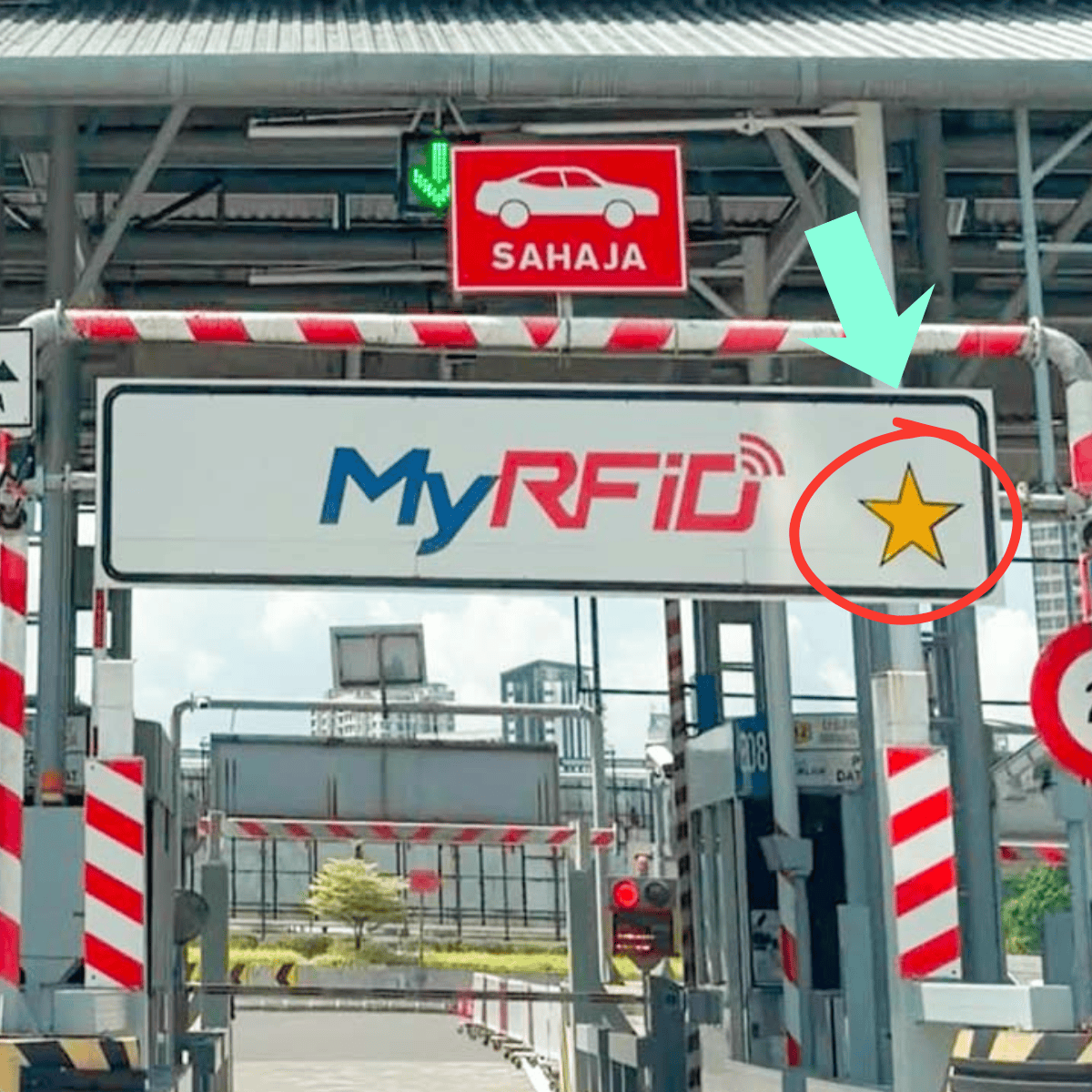
The easiest way to recognize Enhanced RFID Path (Enhanced RFID Path) is by sight Gold Star Symbol (Gold Star) which is clearly placed on the MyRFID logo signboard at the toll plaza.
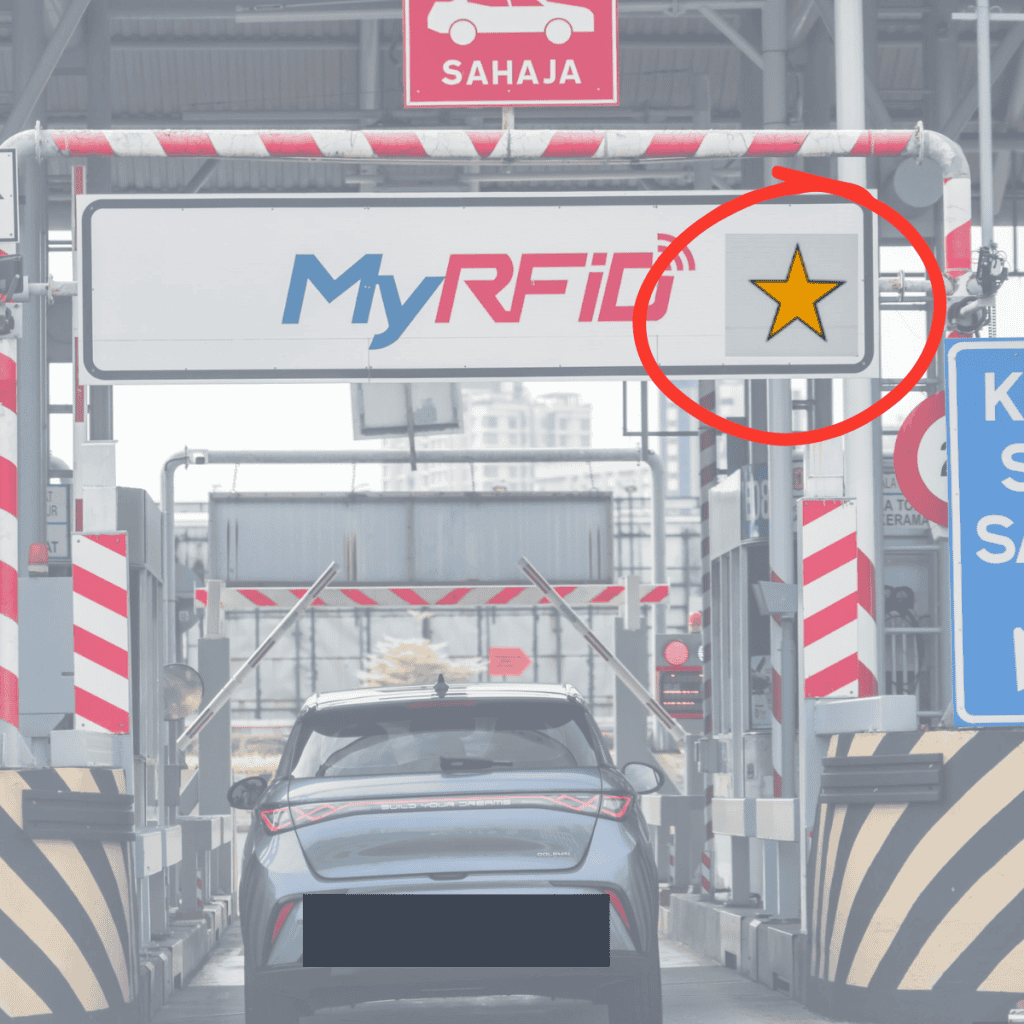
If you look up at the gantry in the path marked with an asterisk, you will see a much more complex hardware design.
You can also recognize it from the reaction of toll booths when driving at:
- Cross Opens Early: Because the artificial intelligence (AI) system detects vehicles very quickly, the toll bar (boom gate) will start lifting from a distance before your car approaches the bar.
- No Need to Stop: The driver in front no longer needs to brake drastically (crawling at a speed of 20 km/h), instead he can continue to glide smoothly at high speed more than 50 km/h
Enhanced RFID Lane Location
So far July 2026The first official location for Enhanced RFID Path (Enhanced RFID Path) located at Dato Keramat Toll Plaza, Ampang-Kuala Lumpur Flyover (AKLEH).
This first lane upgrade was officially opened for the public road to Ampang (Ampang-bounddoes not lead to Kuala Lumpur city center).
You can recognize this physical path Gold Star Symbol (Gold Star) on the toll gantry sign.
Touch ‘n Go Sdn Bhd has announced a target to build and launch at least 10 additional upgraded RFID lanes on selected major highways nationwide before the end of 2026.
Additional note: For those of you who drive on the southern PLUS toll roads such as the Kempas, Tanjung Kupang or Mambau toll roads, the upgrade system running there is still in the pilot project stage. Just go / ANPR PLUS which gives the freedom to choose any lane for license plate scanning, rather than the specific lane marked TNG Gold Star.
Need to Replace a New Tag?
No need. You do not need to purchase or exchange a new physical MyRFID tag to use the Enhanced RFID Path.
You just need to ensure these two things to avoid problems on the toll lanes:
- Clean & Remove Number Plates: Because this system is assisted by an AI camera (ANPR) as a backup plan, make sure your vehicle number plate is not damaged, faded, or covered by car accessories.
- Sufficient eWallet balance: Make sure your Touch ‘n Go eWallet balance is always active (this line also supports this function). SOS Balance if the balance is insufficient for emergency assistance).
Main Advantages of RFID Upgrade (Enhanced RFID Lane)
Initiative RFID Enhancement (Enhanced RFID Path) introduced from July 2026 offers three main advantages that solve the problem of congestion at toll plazas directly:
1. Smooth Driving Over 50 km/h: You can maintain vehicle speed without having to step on the brakes drastically (no need to crawl at 20 km/h like on the old route).
2. Scanning Accuracy Reaches 99.98%: Combines radio signals and AI cameras to eliminate the “slow open bars” problem, thereby reducing the risk of getting stuck or having to reverse the vehicle.
3. Faster Traffic Flow: The ability to process vehicles quickly has succeeded in shortening long queues at toll plazas, especially during rush hours or weekdays.
In addition, this can train drivers in Malaysia to get used to driving straight without stopping at toll plazas, in preparation before the country completely switches to a toll system without bars or Multi-Path Fast Flow (MLFF) quick.
More Information & FAQ RFID Enhancement (Enhanced RFID Path)
For more information, please visit the Touch ‘n Go website and follow us on Facebook Touch ‘n Go Malaysia to get the latest information.
FREQUENTLY ASKED QUESTIONS
No need. This Enhanced RFID Track has backward compatible functions. The system fully supports all three existing generations of MyRFID tags, including the earliest 2018 sticker versions.
Search Gold Star Symbol (⭐ Gold Star) which is clearly displayed on the MyRFID logo sign on the toll road gantry.
You can glide straight at speed more than 50 km/h. Double-gauge smart toll gates (left and right) will open much earlier and faster than the old lanes.
You won’t get stuck. Camera ANPR (AI) will act as a backup plan (reserve) lightning fast to scan your vehicle’s license plate number and match it with your account data to open the toll booth automatically. The overall accuracy of the system is 99.98%.
Dato Keramat Toll Plaza, Jalan Raya AKLEH (towards Ampang). : Touch ‘n Go aims to add 10 more lanes on select major highways by the end of 2026.
PakarPBN
A Private Blog Network (PBN) is a collection of websites that are controlled by a single individual or organization and used primarily to build backlinks to a “money site” in order to influence its ranking in search engines such as Google. The core idea behind a PBN is based on the importance of backlinks in Google’s ranking algorithm. Since Google views backlinks as signals of authority and trust, some website owners attempt to artificially create these signals through a controlled network of sites.
In a typical PBN setup, the owner acquires expired or aged domains that already have existing authority, backlinks, and history. These domains are rebuilt with new content and hosted separately, often using different IP addresses, hosting providers, themes, and ownership details to make them appear unrelated. Within the content published on these sites, links are strategically placed that point to the main website the owner wants to rank higher. By doing this, the owner attempts to pass link equity (also known as “link juice”) from the PBN sites to the target website.
The purpose of a PBN is to give the impression that the target website is naturally earning links from multiple independent sources. If done effectively, this can temporarily improve keyword rankings, increase organic visibility, and drive more traffic from search results.