In 2026, a total of 15 heat-related cases were reported, including one tragic death involving a child.
Therefore, don’t take it lightly if your child complains of a headache after playing in the park. The child’s face is red, hands are cold, dizzy and wants to vomit. This may be a sign that your child is suffering from heat stroke, which is very life-threatening.
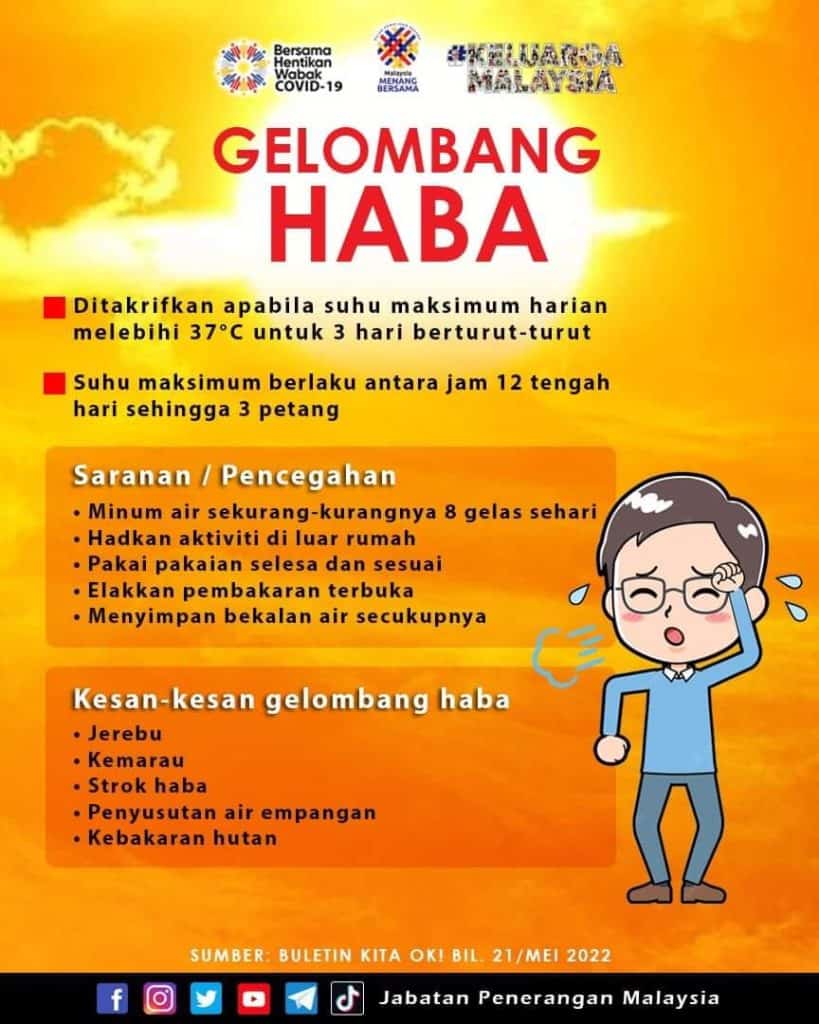
MET Malaysia had previously issued hot weather status level 1 (caution) with temperatures increasing to 35-37°C, especially in the northern region of the peninsula. Always monitor FB Met Malaysia to see the latest weather situation in Malaysia.
Follow the next sharing about heat stroke in this article.

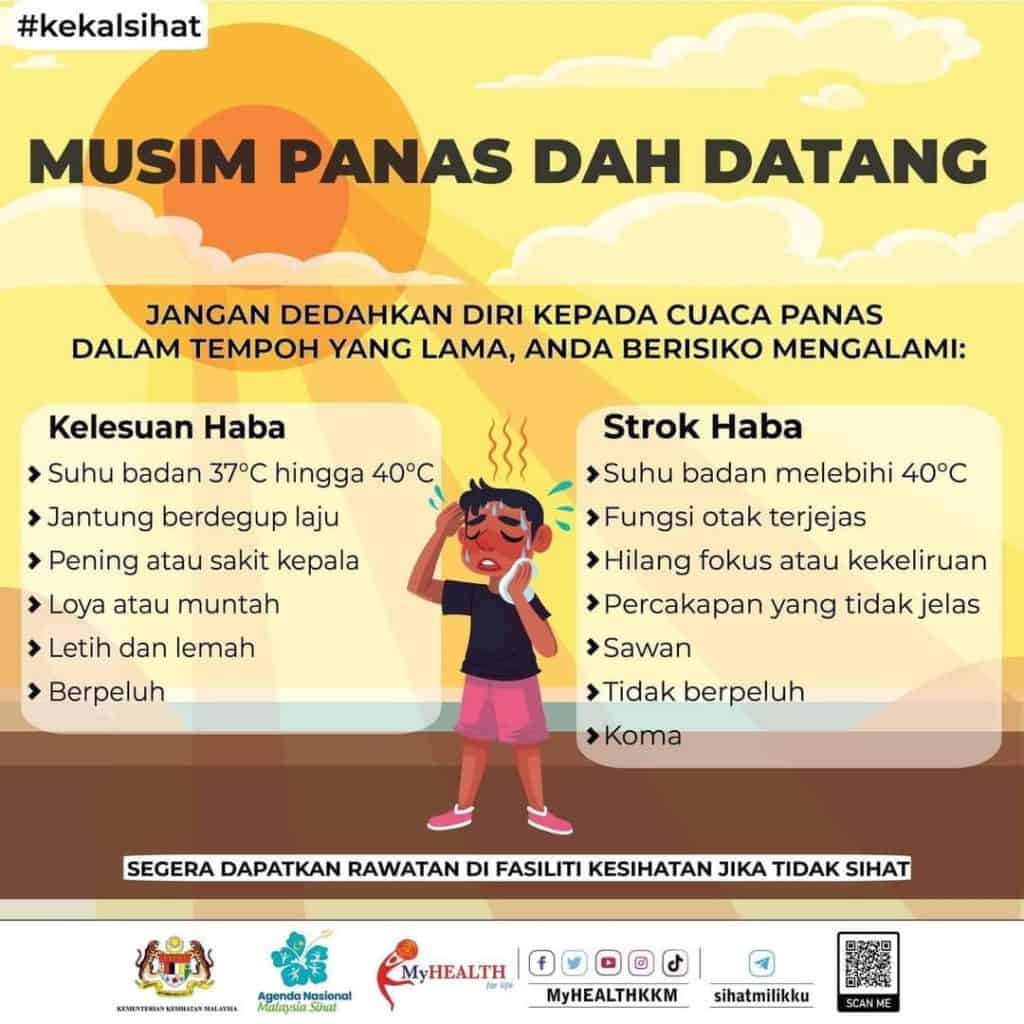
What is Heat Stroke?
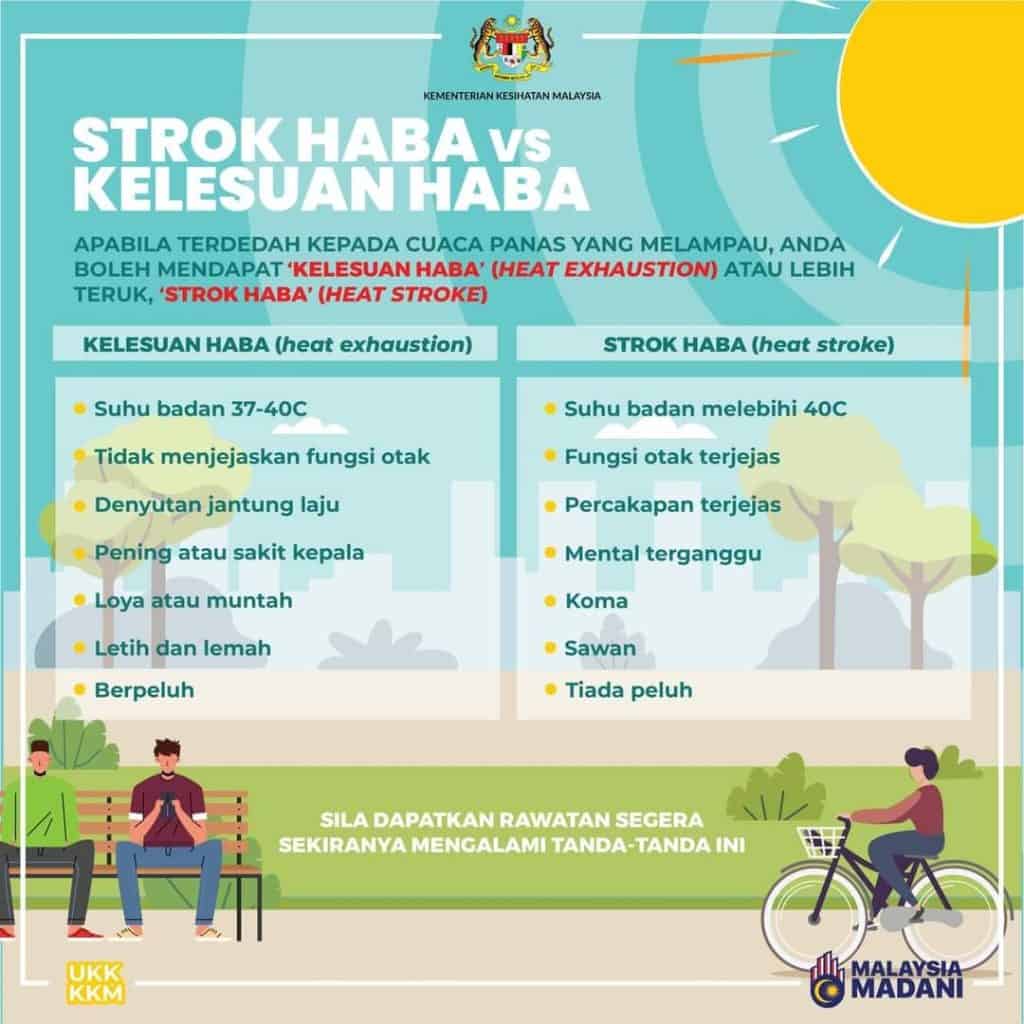
If exposed to extreme hot weather, you can experience ‘heat exhaustion’ (heat exhaustion) or worse, ‘heat attack’ (heat stroke).
Heat stroke is a serious condition resulting from exposure to a very hot environment which causes the body to be unable to stabilize body temperature and occurs when body temperature rises rapidly above 40°C (degrees Celsius) or more.
Heat stroke can occur suddenly or gradually.
The incidence rate of heatstroke varies depending on geographical factors, weather and the activities of local residents. The risk of heat stroke is high when the environmental temperature is above 39.2°C.
According to Lecturer in Medicine, Department of Community Medicine, Faculty of Medical Sciences, Universiti Sains Malaysia (USM), Associate Professor Dr. Nik Rosmawati Nik Husain, based on the 2023 ‘World Health Organization’ (WHO) report, the continuing heat wave phenomenon in Europe in mid-2022 has caused more than 20,000 deaths due to heat stroke.
“In Malaysia, 200 cases of heat-related illnesses have been reported, of which 22 cases were heat stroke. Therefore, active measures must be taken to avoid the occurrence of heat-related illnesses such as heat stroke.
“The Meteorological Department of Malaysia (METMalaysia) has also reported a heat and dry wave hitting the country due to the transition of the monsoon and this situation is expected to continue until July 2023 apart from hitting other Asian countries including Thailand, Vietnam, China, India and Bangladesh,” he said.
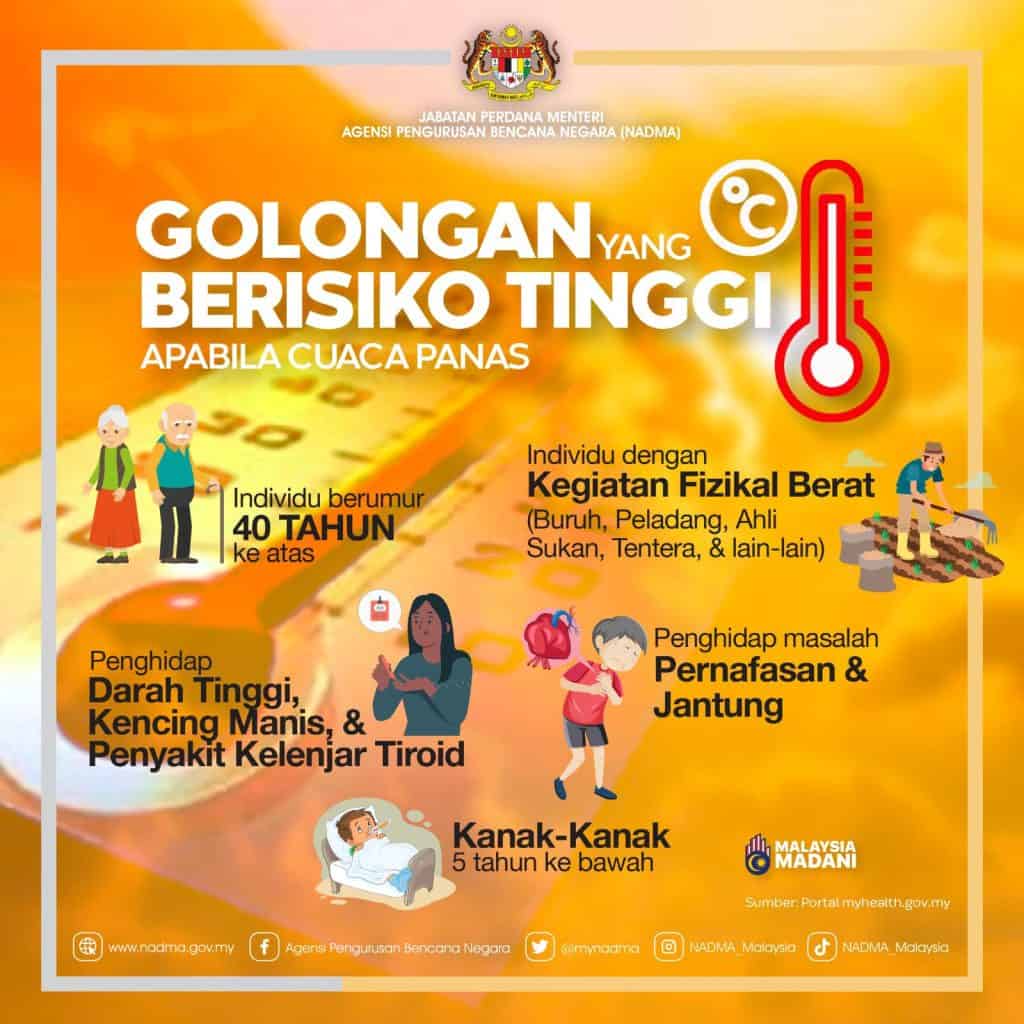
In the Risk Group
The risk groups for experiencing heat stroke are as follows:
- Babies and children
- Chronic patients
- Golden citizen
- Individuals are active under heat
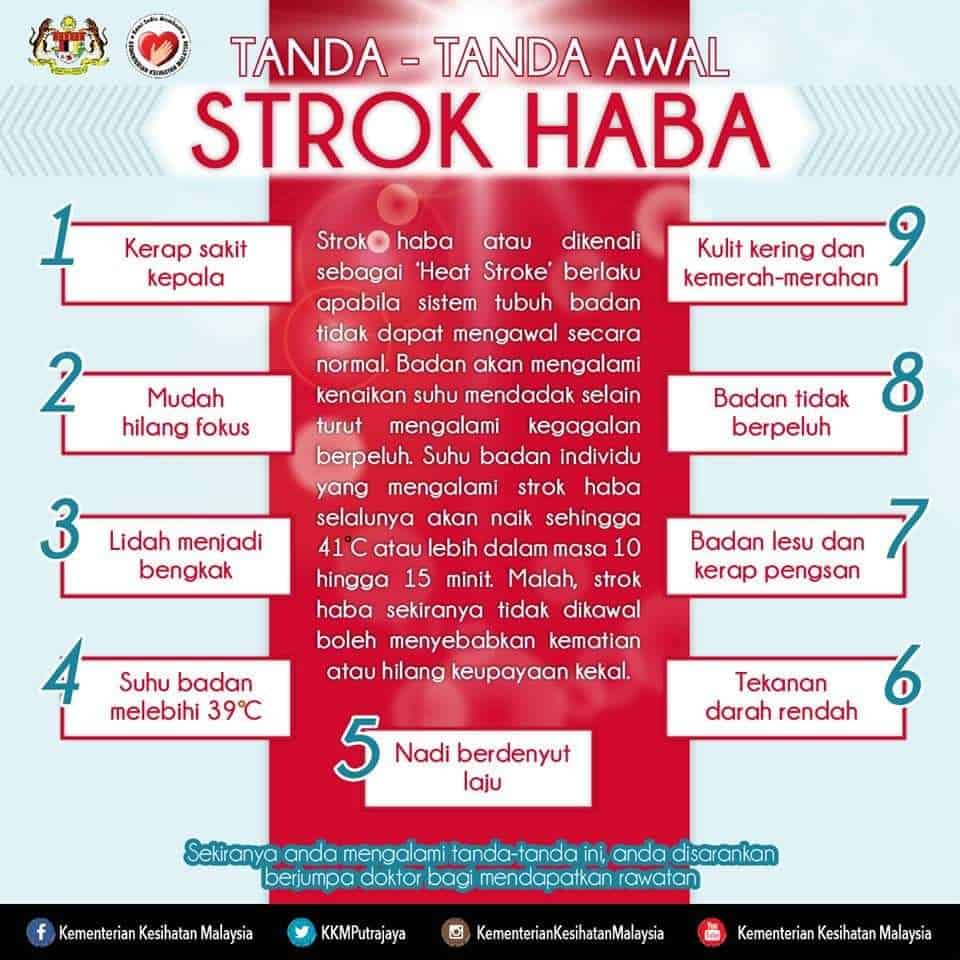
Signs/Symptoms of Heat Stroke
The public needs to know the signs and symptoms of heat stroke so that action can be taken immediately.
Among the signs that someone is suffering from heat stroke are:
- Prolonged dizziness
- Thirst
- The heart rate becomes fast and the patient will feel a pounding heart (normal heart rate: 60-100/minute)
- Rapid and shallow breathing (normal breathing rate: 12-20/min)
- The body feels hot and dry
- Headache, dizziness and dizziness
- Feeling nauseous
- Sudden increase in body temperature to 40°C or more (normal body temperature: 36.5°C to 37.5°C)
- Decreased blood pressure (normal blood pressure: 120-140/60-80 mmHg)
- Unconsciousness, fainting or seizure.


MUST KNOW: EARLY SIGNS OF HEAT STROKE
Preventive measure
The public also needs to know several important preventive steps to avoid heat stroke, namely:
- Drink enough water (≥8 glasses a day)
- (Physical activity) Drink 200-250ml every 15-20 minutes
- Avoid outdoor activities in hot weather
- Choose morning or evening to exercise
- Grow in a shady/air-conditioned place
- Wear bright, light & loose clothing
- Use an umbrella/hat when leaving the house
- Shower or moisturize frequently
- Reduce caffeinated/sweet drinks
- Add more juicy fruit
- Avoid doing physical activity when tired, hungry or excessively thirsty,
- Practicing a healthy and balanced diet, wearing loose and light clothing and heat protection such as a hat or umbrella,
- Do not leave anyone in a vehicle parked in the hot sun
- Ensure adequate ventilation or air conditioning if inside a house or building
He also advised the public to immediately seek treatment at the nearest hospital or clinic if they have early symptoms of heat illness.


In the Risk Group
Individuals who are active or work in hot environments are identified as being at high risk, such as construction workers, farmers, security guards, police, soldiers, firefighters, heat engine operators, athletes, and outdoor activities carried out under the hot sun.
Apart from that, several vulnerable groups are also known to have an increased risk of heat stroke, such as senior citizens, children and individuals with chronic diseases.
Treatment
On-scene treatment:
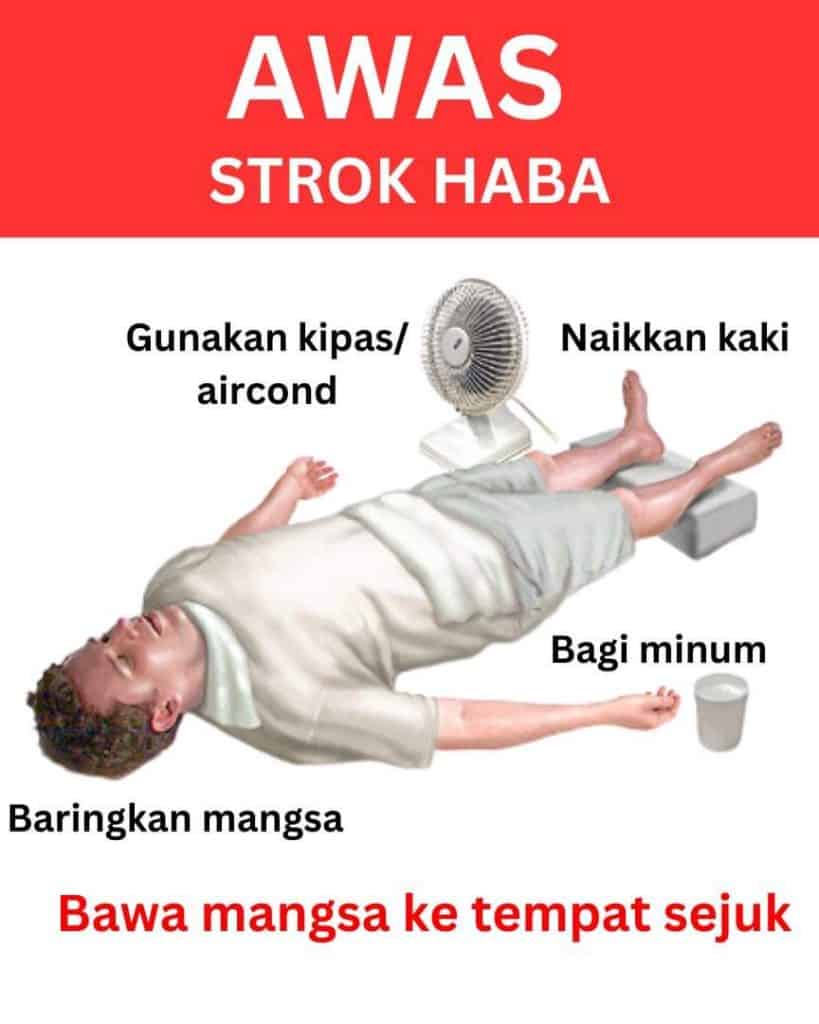
- Move the victim from extreme sunlight to a covered or cool place.
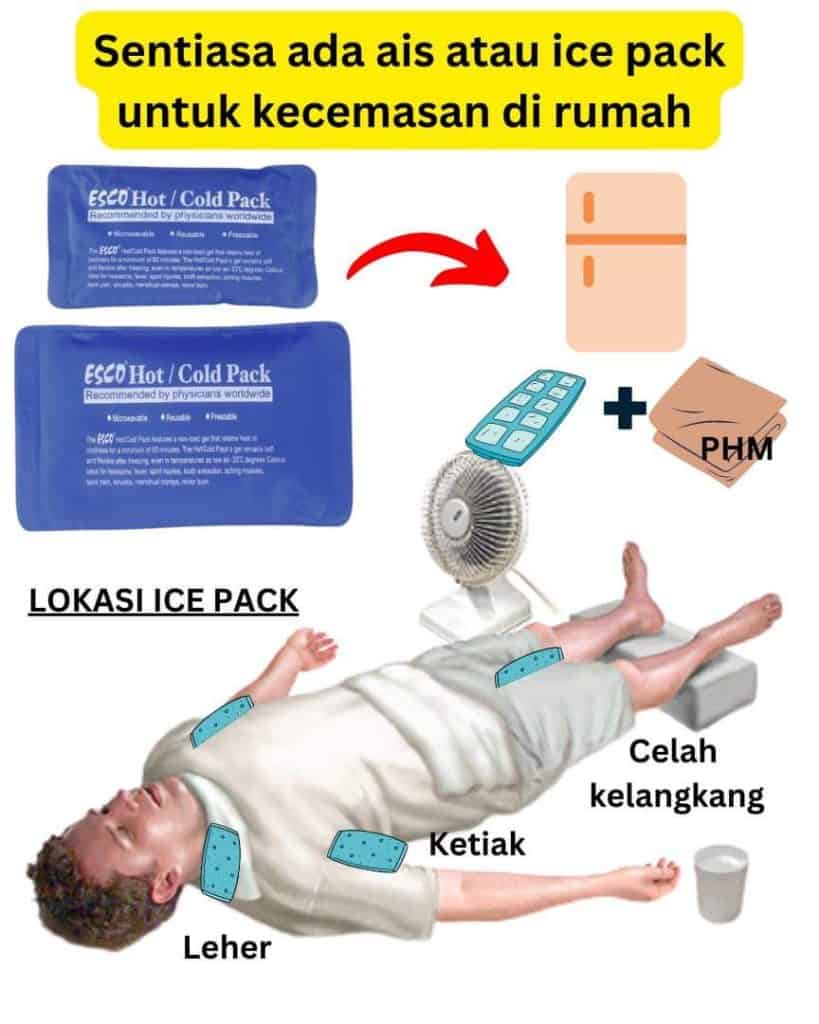
- Cool the victim with a damp cloth or splash with cold water.
- Provide fresh air, direct a fan directly or a fan at the victim using a newspaper.
- If the victim is conscious, give him a cool, fresh drink.
- Get medical help via line 999.
Hospital treatment:
- The victim will be checked for pulse, blood pressure, respiratory rate and level of consciousness.
- If the victim experiences shock, special treatment will be given.
- Blood tests and other related supporting examinations will be carried out if necessary.
Dangers/Complications of Heat Stroke
Heat stroke should not be taken lightly as it can cause serious complications.
Based on the article written by Bouchama et al. (2022), the short-term impact of sudden exposure to hot weather can result in injury to body cells, inflammation, blood clots and bleeding in several important organs.
Heat stroke victims can experience long-term effects such as problems with the nerves, cardiovascular system, and risk of death.
Always get the latest weather information from METMalaysia and related health alerts from the Malaysian Ministry of Health.
Reduce or avoid doing outdoor activities or exercising in hot weather.
Further Information
For further information about Heat Stroke, please visit the website
Also read: 5 Stages of Kidney Disease & Silent Signs You Need to Know
PakarPBN
A Private Blog Network (PBN) is a collection of websites that are controlled by a single individual or organization and used primarily to build backlinks to a “money site” in order to influence its ranking in search engines such as Google. The core idea behind a PBN is based on the importance of backlinks in Google’s ranking algorithm. Since Google views backlinks as signals of authority and trust, some website owners attempt to artificially create these signals through a controlled network of sites.
In a typical PBN setup, the owner acquires expired or aged domains that already have existing authority, backlinks, and history. These domains are rebuilt with new content and hosted separately, often using different IP addresses, hosting providers, themes, and ownership details to make them appear unrelated. Within the content published on these sites, links are strategically placed that point to the main website the owner wants to rank higher. By doing this, the owner attempts to pass link equity (also known as “link juice”) from the PBN sites to the target website.
The purpose of a PBN is to give the impression that the target website is naturally earning links from multiple independent sources. If done effectively, this can temporarily improve keyword rankings, increase organic visibility, and drive more traffic from search results.